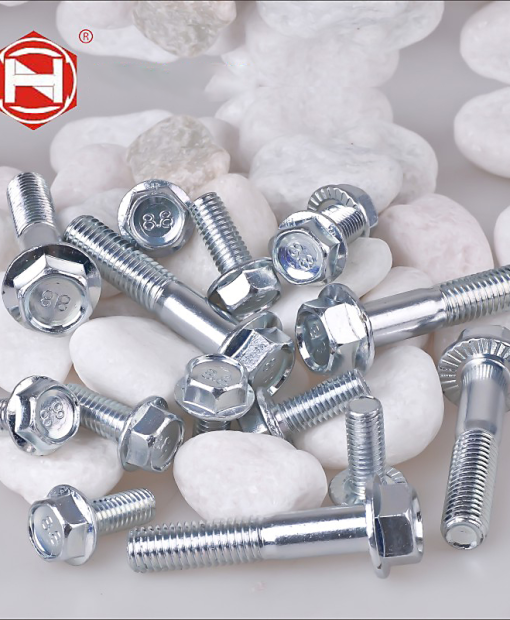

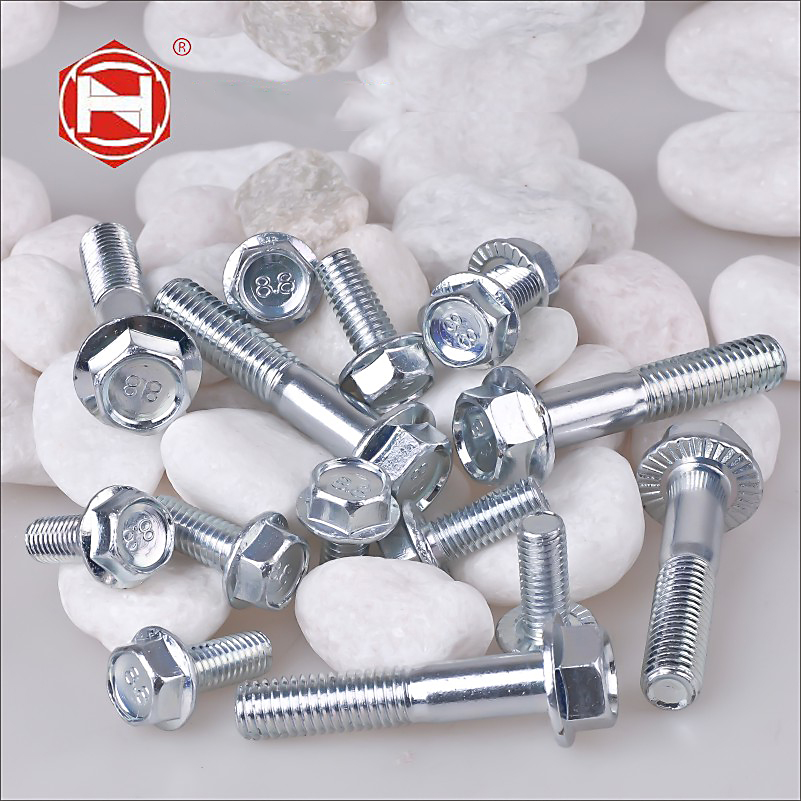
Choosing the right flange head bolt helps you secure mechanical assemblies, distribute clamping loads, and reduce the risk of loosening under vibration. However, selecting a bolt involves more than checking its thread size. You also need to consider the material, strength grade, surface coating, head design, and operating environment. An unsuitable combination may increase corrosion risks, complicate installation, or affect joint reliability.
The ISO 4162 hexagon flange bolt in the small series offers an integrated flange that increases the bearing surface beneath the head. Its design can simplify assembly by reducing the need for separate washers when the joint configuration permits. Shenhu Precision Parts (Hong Kong) Limited supplies fasteners for industrial applications, including automotive assembly, machinery, and new energy equipment. This guide explains the key specifications, material options, and selection steps to help you evaluate flange bolts for your application.
What Is an ISO 4162 Flange Head Bolt?
An ISO 4162 flange bolt combines a bolt head with an integrated flange. Unlike a conventional hex bolt, which generally relies on a separate bearing surface or washer, the flange provides a wider contact area beneath the head.
For assemblies exposed to vibration or repeated mechanical loads, this design can support more consistent clamping when engineers select the correct bolt and tightening conditions. Some flange designs also incorporate anti-slip teeth to increase resistance to rotation. However, actual locking performance depends on the joint design, surface condition, and installation torque.
Key Product Specifications
Shenhu’s ISO 4162 hexagon flange bolts are available in different material, strength, and surface-treatment options.
- Standard: ISO 4162
- Material: High-strength alloy steel or stainless steel
- Strength grades: 8.8, 10.9, and 12.9, depending on the selected specification
- Size range: M5–M20, with M5–M16 listed as the standard coarse-thread range
- Thread specification: Coarse thread, 6g tolerance
- Surface treatments: Zinc plating, Dacromet coating, black oxide, and phosphating
- Length: Customizable according to assembly requirements
Before ordering, confirm the exact head geometry, thread dimensions, strength grade, coating, and applicable standard. These details help you determine whether a specific flange head bolt meets your engineering requirements.
How to Choose the Right Flange Head Bolt
Selecting the correct bolt requires matching its mechanical properties and dimensions to the application. Use the following factors to narrow your options.
1. Compare Materials and Strength Grades
Alloy steel is a practical option when your assembly requires high mechanical strength. Stainless steel may be appropriate where corrosion resistance is an important consideration, although its performance depends on the specific grade and environment.
Strength grades also matter. For example, grades 8.8, 10.9, and 12.9 represent different mechanical property requirements for applicable steel fasteners. You should verify the required grade against the design load, mating components, and relevant specifications rather than selecting a grade based on strength alone.
2. Select a Suitable Surface Treatment
The operating environment determines which coating deserves consideration.
- Zinc plating: Commonly used to provide a protective coating on steel fasteners.
- Dacromet: A coating option for applications requiring enhanced corrosion protection.
- Black oxide: Provides a black surface finish and limited corrosion protection unless supplemented by suitable protective measures.
- Phosphating: Often used as a conversion coating or as part of a wider finishing process.
For outdoor equipment, automotive components, and energy storage assemblies, specify the expected exposure conditions and corrosion testing requirements before choosing a finish.
3. Check Dimensions and Installation Requirements
Verify the bolt diameter, length, thread engagement, head clearance, and flange contact surface. If you intend to use a flange bolt without a separate washer, confirm that the flange provides suitable bearing coverage and that the mating surface supports the required clamping force.
Flange Head Bolt vs. Standard Hex Bolt
The following comparison highlights the main design differences when evaluating fasteners for industrial assembly.
| Feature | Flange Head Bolt | Standard Hex Bolt |
|---|---|---|
| Head design | Integrated flange beneath the head | Conventional hexagonal head |
| Bearing surface | Wider contact area from the flange | Usually smaller head bearing area |
| Washer requirement | May eliminate a separate washer | May require a washer, depending on the joint |
| Assembly considerations | Requires suitable flange clearance | Requires suitable head and washer clearance |
| Typical applications | Automotive, machinery, and industrial assemblies | General mechanical and structural fastening |
Neither design suits every application. You should compare the available bearing area, joint geometry, tightening procedure, and load requirements before making a final selection.

Common Applications of ISO 4162 Flange Bolts
A properly specified flange bolt can support a range of industrial fastening applications.
- Automotive assembly: Chassis components, engine assemblies, and other mechanical joints.
- Construction machinery: Equipment housings and mechanical connections exposed to operational loads.
- New energy and energy storage equipment: Structural and mechanical assemblies that require suitable strength and corrosion protection.
- Steel structures: Connections where the bolt dimensions and load capacity match the engineering design.
- Home appliance molds: Fixture and equipment assemblies that require repeatable fastening.
- Rail transit equipment: Mechanical connections selected according to the relevant design and maintenance specifications.
For each application, check the operating temperature, vibration exposure, corrosion conditions, and maintenance requirements. The application name alone does not determine the correct fastener specification.
How to Order Custom Flange Head Bolts
Follow these steps to communicate your requirements clearly and reduce the risk of ordering incompatible fasteners.
- Identify the standard and dimensions. Specify ISO 4162, nominal diameter, bolt length, thread pitch, and required head geometry.
- Confirm the material and strength grade. State whether you need alloy steel or stainless steel and identify the required mechanical properties.
- Choose the surface treatment. Describe the operating environment and specify the preferred coating or corrosion test requirements.
- Provide application details. Explain the assembly location, expected loads, vibration conditions, and installation constraints.
- Request a specification review. Ask the supplier to confirm dimensional compatibility, available options, inspection requirements, and delivery details before placing the order.
Shenhu Precision Parts (Hong Kong) Limited was established in May 1984 and reports more than 40 years of fastener R&D and manufacturing experience. The company identifies IATF 16949, ISO 9001, and ISO 45001 among its management system certifications. Its stated production capacity includes more than 100 machines and an annual output of 500 million pieces. Confirm the applicable certification scope and product-specific inspection documents when evaluating a supplier.
FAQ
1. What is the difference between ISO 4162 and DIN 6921 flange bolts?
ISO 4162 and DIN 6921 are standards associated with flange bolts, but you should not assume that every dimension or specification is interchangeable. Check the applicable standard edition, head dimensions, thread requirements, and product drawing before substituting one for the other.
2. Can a flange head bolt be installed without a washer?
In suitable applications, the integrated flange can provide the required bearing surface without a separate washer. However, you should check the mating surface, contact pressure, joint design, and any applicable assembly requirements before removing a washer from an existing design.
3. Which coating should you choose for corrosion resistance?
The appropriate coating depends on the base material, environmental exposure, required corrosion performance, and compatibility with the assembly. Zinc plating and Dacromet are options for certain steel fasteners, while stainless steel may suit other environments. Request relevant coating specifications and test results before finalizing your choice.
Conclusion
Selecting the right flange head bolt requires more than matching a nominal diameter. You need to consider the ISO standard, material, strength grade, coating, installation conditions, and intended application. Shenhu Precision Parts (Hong Kong) Limited offers ISO 4162 flange bolts in a range of material, strength, and surface-treatment options for industrial fastening requirements.
Request a product specification review from Shenhu to confirm available sizes, material grades, surface finishes, and customization options for your assembly. Provide your required dimensions and application details to help the team assess a suitable flange bolt solution.